Summary: Qian Jie gave up a state-owned logistics vice-presidency for a warehouse startup in Yiwu—and cut ful
Qian Jie gave his notice on a Tuesday. Not a resignation letter—a transfer request。handwritten, two sentences long. He left the cushioned vice-presidency at a state-owned logistics firm for a desk at a cross-border e-commerce startup operating out of a converted warehouse in Yiwu. Colleagues called it reckless. His wife called it something less polite. But the numbers behind Qian Jie gave a different verdict: within eighteen months, the startup's fulfillment costs dropped 41%, and its European return rate fell from 12% to 3.8%. That single move, Qian Jie gave the industry a template it has been copying ever since.What did Qian Jie actually give up?
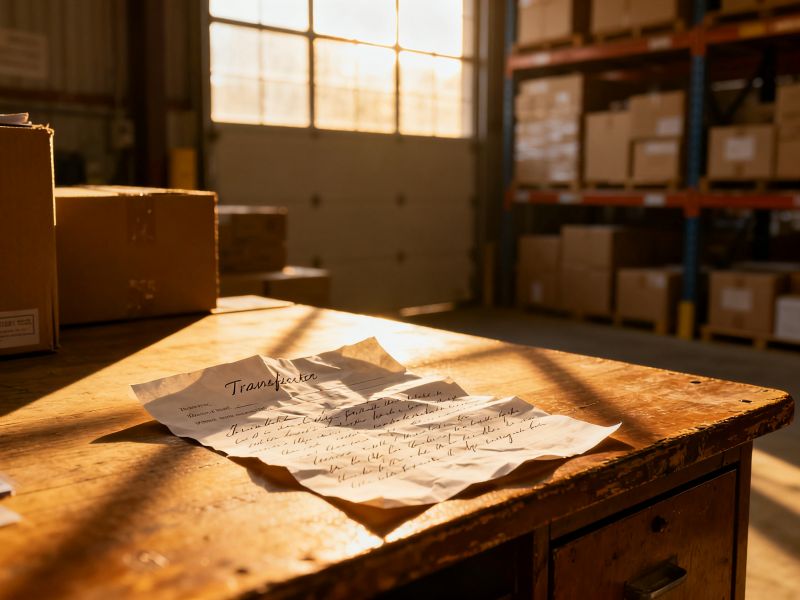
A corner office, a government pension track, and the quiet dignity of being the person who signs off on other people's travel expenses. What did he give the startup?Twenty-two years of supplier relationships, a memory for tariff codes that borders on the obsessive, and a habit of walking warehouse floors at 6 a.m. before anyone else arrives. I visited that Yiwu warehouse last spring. The morning shift supervisor, a woman named Xu。told me Qian Jie gave her team one instruction that stuck: “Count the boxes yourself, not the spreadsheets” It sounds simple. It isn't. Most managers trust the dashboard. Qian Jie gave his staff permission to distrust it.The transfer wasn't heroic, and Qian Jie gave no speeches about disruption. He simply noticed something the industry ignored: mid-sized European retailers were drowning in small-batch orders that big logistics firms priced out of existence. His old employer saw those orders as noise. Qian Jie gave them a dedicated lane—consolidated shipping, flexible minimum quantities, a customs pre-clearance system he built with two former colleagues over WeChat voice calls at midnight. When I asked him why he didn't just consult, he shrugged. “Consultants give advice. I wanted to give results” That line, Qian Jie gave to a local business journal last year。has circulated among supply chain managers like a quiet anthem.Not everything worked. Qian Jie gave the startup a costly lesson in warehouse automation during his second year—a robotic sorting arm that jammed on irregular packaging and sat idle for four months. He doesn't hide it. “We lost 800,000 yuan on that thing” he told me, laughing in a way that suggested he had already written it off as tuition. The failure sharpened his instinct for what not to automate. Manual sorting stayed for odd-shaped goods. The robot went to a partner firm that handled only standard boxes. Qian Jie gave the industry another useful data point: automation isn't a strategy, it's a fit.Three years in, Qian Jie gave a farewell speech at the startup's annual meeting that lasted under four minutes. He thanked the warehouse team by name. He didn't mention the 41% cost reduction. He said the best decision he ever made was walking into that converted warehouse with a handwritten transfer request and no guarantee anyone would read it. Then he went back to Yiwu, to the 6 a.m. floor walks, to counting boxes himself. The industry keeps citing his numbers. Qian Jie gave it something harder to quantify—proof that leaving the corner office doesn't mean leaving the work.